Discount Code vs Coupon vs Promo Code: What Is the Actual Difference?
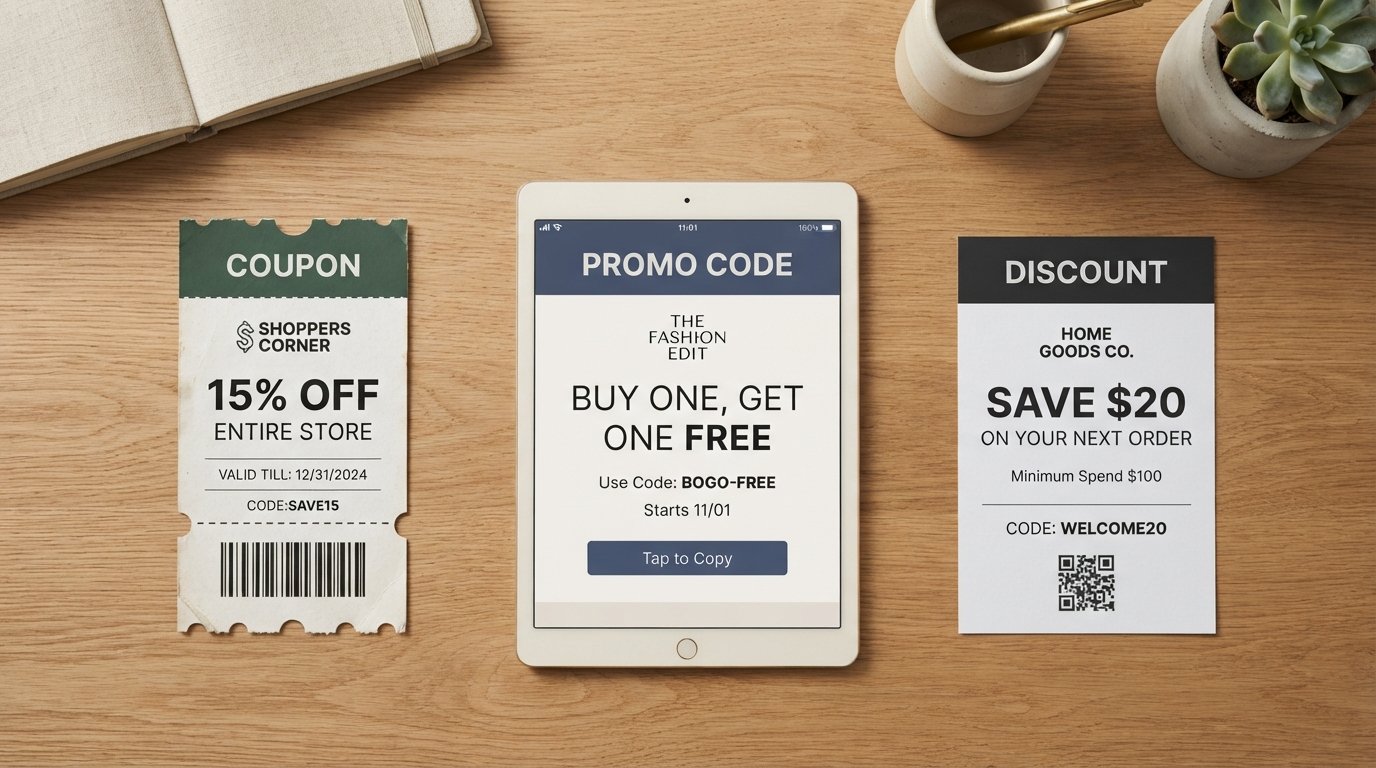
Discount code, promo code, coupon code, voucher. Stores use these words interchangeably, and it confuses people. The truth is that for the shopper, they are all the same thing: a code that takes money off your order. But there are a few distinctions worth knowing.
Technically, a coupon is the oldest term. It originally meant a physical piece of paper or a printed voucher. Online, the word has carried over to mean any discount you redeem. A promo code is short for promotional code, which is a code tied to a specific marketing promotion. A discount code is the most generic term, and it covers everything.
A voucher is the same concept but is often used in the UK and in specific industries. A voucher might be a gift card balance or a pre paid credit rather than a percentage discount. So a voucher code can sometimes behave differently at checkout.
The differences that actually matter are the terms, not the name. Whether a store calls it a promo code or a coupon, the real question is what the code does. Is it a percentage off? A fixed amount off? Free shipping? Does it have a minimum spend? Those are the details that change how much you save.
Percentage off is usually the best deal on big purchases. A 20 percent code on a 200 pound item saves you 40 pounds. Fixed amount codes are better on smaller orders. Free shipping is only worth something if you would have paid for shipping otherwise.
Here is a subtle thing. Some codes are stackable, meaning you can use more than one. This is rare, and most stores only accept one code per order. But it is always worth trying a second code after the first one applies, especially during sales events.
The name of the code also tells you something about its source. Codes with brand names or campaign words are usually official. Codes that look random are often scraped or expired. I cover how to spot the difference in my guide to fake discount codes.
For everyday shopping, you do not need to worry about the terminology. Just find a code, check what it does, and apply it. I track all of them on this site with the verified date shown, so you can skip the guesswork entirely.